2200K — Ultra Warm / Vintage Filament
Amber glow with just enough color rendering to be usable
2200K is the classic 'Edison bulb' look — clearly golden, noticeably warmer than a standard warm white, but with enough breadth left in the spectrum to keep a room navigable rather than purely decorative.
Open 2200K in the visualizer- CIE 1931 x
- 0.5054
- CIE 1931 y
- 0.4152
- Locus
- Planckian (black body)
- Category
- Warm White
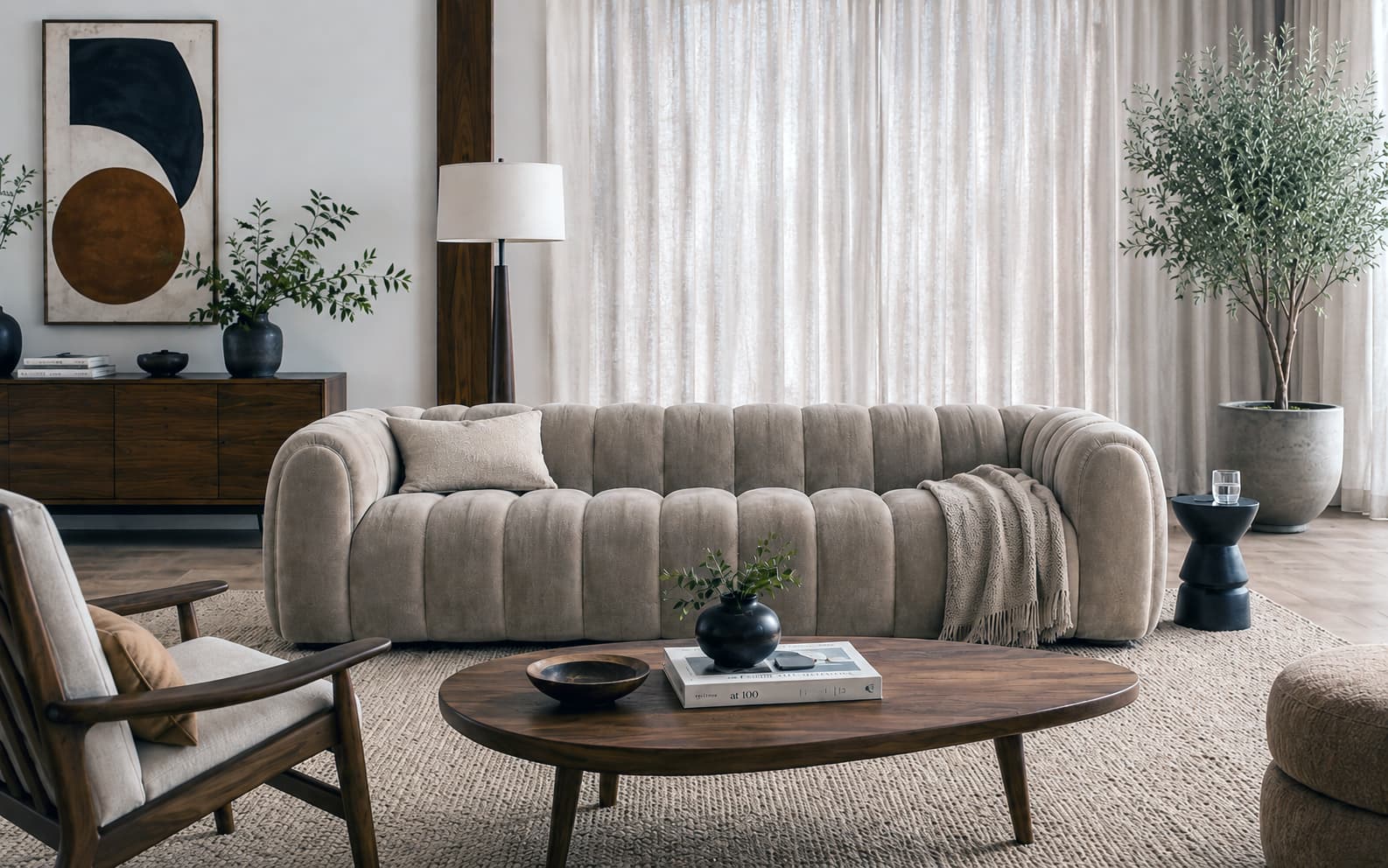
2200K in four rooms
What it does well
- Warm and characterful without the total color collapse of 1800K
- The expected look for exposed-filament and decorative fixtures — reads as intentional design
- Comfortable to look at directly, so bare-lamp fixtures work without heavy shielding
- Still very low in blue content; good for evening use
- Widely available in LED filament formats at reasonable CRI
What it costs you
- Whites and cool greys go cream — noticeable against white trim or subway tile
- Task performance drops measurably compared with 3000K and above
- Photographs poorly on auto white balance; phone cameras tend to over-correct it to grey
- Efficacy is typically lower than neutral products, so more watts per lumen
- Looks jarringly yellow if any 4000K+ fixture is visible in the same view
In practice
2200K is where decorative lighting lives. Exposed-filament lamps, amber globe strings and most 'vintage' LED reproductions target this figure because it matches the appearance of a low-wattage carbon-filament bulb from the early twentieth century.
Compared with 1800K it is meaningfully more practical. Blues are still suppressed, but greens survive well enough that plants and foliage do not look dead, and whites read as cream rather than orange. It is the warmest temperature that most people will accept as a room's primary ambient source without complaint.
It is also the temperature at which fixture glare becomes most forgiving. Because the source is dim and warm, an exposed lamp in the field of view is far less objectionable than the same fixture at 4000K, which is precisely why designers get away with bare bulbs in hospitality settings.
Mood
Nostalgic and hospitable. Signals 'linger here' more strongly than any other common temperature.
Sleep & alertness
Low melanopic content makes this a good evening ambient temperature. Reasonable from dusk onward.
Color rendering
Filament-style LEDs at 2200K vary enormously. CRI 90+ versions render wood and skin beautifully; cheap CRI 80 versions look flat and slightly green. The price difference is usually worth it here.
How it feels: Golden and dim-lit, the look of a filament bulb at low output.
Want to see 2200K in your own room?
The photo tool re-renders a picture of your space at this exact temperature, in your browser.
Open the photo tool